
Sauna & Banya History in Alaska
Sauna and Banya culture is not a modern trend in Alaska — it is a centuries-old survival and community tradition. We trace the roots of hot-steam houses from Russian America to early Finnish settlements.
Russian Banya traditions in Sitka and Kodiak
Russian fur traders and settlers established log banyas in Sitka, Kodiak, and Kenai during the late 18th century. They introduced the custom of throwing water on hot stove stones for steam, whisking with birch branches (venik), and contrast bathing in snow or cold ocean water.
Finnish sauna influence during the Gold Rush
Finnish miners, fishermen, and homesteaders built traditional wood-fired log saunas across the Interior and Southeast Alaska. For these pioneers, the sauna was the first structure erected on a homestead, serving as a clean shelter, laundry room, and vital source of heat during sub-zero winters.
The enduring legacy of steam in the North
Today, steam bathing remains an essential part of Alaskan life. From native sweat houses (Maqi) in Western Alaska villages to modern wood-fired cedar barrels, the practice of seeking high heat to survive and thrive in the cold continues to bring Alaskans together.
Recommended models
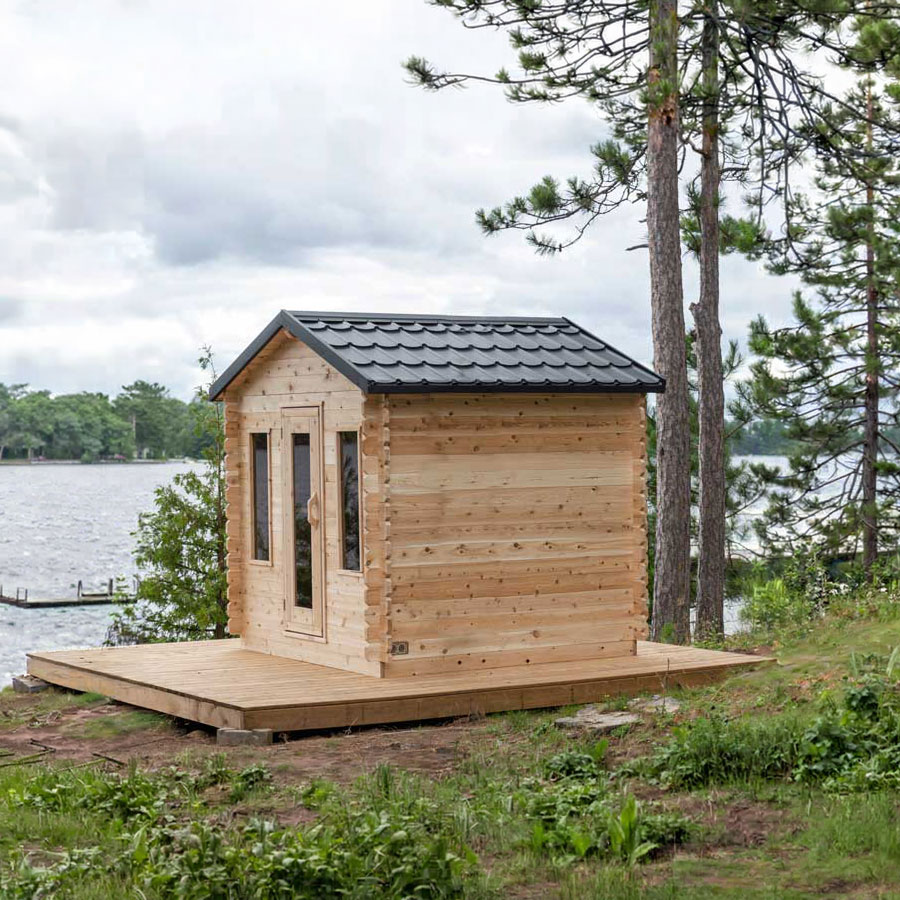
Canadian Timber Granby
Outdoor cabin sauna with dual-level benches and efficient cedar construction.
Bring real heat to your home.
Get a personalized quote — equipment, freight, and install — in one business day.